

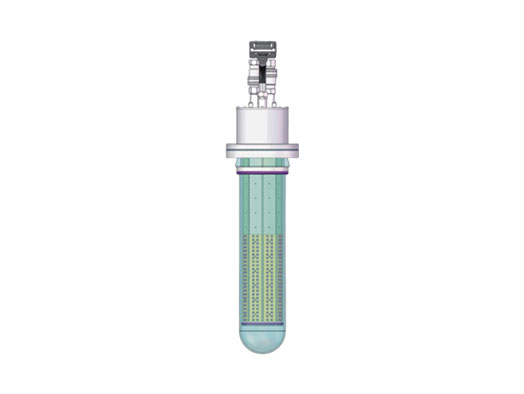
A photochemical chlorination reactor is a specialized process vessel designed to carry out chlorination reactions under controlled light exposure, typically using ultraviolet or other high-energy irradiation to initiate or accelerate chemical transformation. In modern chemical processing, photochemical chlorination reactors are valued for their ability to improve reaction selectivity, support cleaner production pathways, and enable efficient gas-liquid or liquid-phase chlorination with tighter process control. For manufacturers, researchers, and process engineers, understanding the technical advantages of photochemical chlorination reactors is essential when evaluating equipment for chlorination chemistry, process intensification, and scalable production.
This content provides an original, SEO-friendly overview of photochemical chlorination reactor technology, including definitions, working principles, technical advantages, typical specifications, process benefits, application areas, and key selection considerations. It is written for use in blogs, industry pages, directory pages, and technical content hubs. The information is industry-neutral and does not include specific company recommendations.
A photochemical chlorination reactor is a reactor system that uses light-driven activation to promote chlorination reactions. In many cases, the reactor uses ultraviolet light to generate reactive species, initiate radical pathways, or improve the reaction rate of chlorination chemistry. Depending on the process design, the reactor may be configured for batch operation, continuous flow operation, or semi-batch operation.
The main purpose of a photochemical chlorination reactor is to provide a controlled environment where chlorine-containing reagents, substrates, solvents, and light energy interact under carefully managed temperature, mixing, and residence-time conditions. This makes it useful for fine chemical synthesis, specialty intermediates, and other applications requiring high selectivity or precise reaction management.
In industry, the phrase photochemical chlorination reactor technical advantages often refers to the measurable benefits associated with reactor design, such as improved conversion, reduced by-products, better heat dissipation, enhanced safety, and stronger scalability.
Photochemical chlorination typically depends on the interaction between light energy and chlorinating species. Under irradiation, certain molecules absorb photons and form excited states or radicals. These reactive intermediates can then react with target compounds to introduce chlorine atoms, form chlorinated derivatives, or modify molecular structures through substitution or addition.
The reactor must therefore support several technical requirements at the same time:
Because light penetration, mass transfer, and heat transfer strongly affect performance, the reactor geometry and materials of construction are key factors in determining process efficiency.
The greatest strength of a photochemical chlorination reactor is that it combines chemical reactivity with engineered process control. Compared with conventional chlorination equipment, it can offer better selectivity, improved energy utilization, and superior control over reaction pathways. Below are the most important advantages.
One of the most important technical advantages of photochemical chlorination reactors is selectivity control. Light-driven initiation can favor specific reaction pathways, which helps reduce unwanted side reactions. This is especially valuable in chlorination processes where over-chlorination, degradation, or complex by-product formation can reduce yield and increase purification costs.
In practice, improved selectivity can mean:
Photochemical activation can accelerate chlorination reactions by generating reactive intermediates quickly and efficiently. This can shorten reaction time and increase throughput. For many industrial users, shorter cycle time is a major operating advantage because it increases equipment utilization and production efficiency.
Faster kinetics are particularly beneficial when the process requires:
A photochemical chlorination reactor supports more precise control of key variables than many traditional chlorination systems. Operators can regulate light intensity, exposure time, temperature, flow rate, and reagent dosing to maintain a stable and repeatable process.
Process control advantages include:
Chlorination chemistry can involve hazardous reagents, toxic vapors, exothermic reactions, and corrosive by-products. A well-designed photochemical chlorination reactor can improve safety by keeping the reaction enclosed, controlled, and instrumented. Proper reactor design can also reduce operator exposure and help manage heat and pressure more effectively.
Safety-related benefits often include:
Many chlorination reactions are exothermic, so heat control is critical. Photochemical chlorination reactors are often engineered with efficient cooling surfaces, jackets, coils, or continuous-flow heat exchange features to remove heat quickly and maintain reaction stability.
Effective heat transfer can help prevent:
Because the reaction can be better controlled by light exposure and residence time, photochemical chlorination reactors may generate fewer unwanted side products than less precise systems. This not only improves product quality but also reduces downstream purification requirements, waste generation, and solvent consumption.
Many modern photochemical chlorination reactor systems are compatible with continuous processing. Continuous flow operation can improve mixing, mass transfer, and reproducibility while enabling scalable production. Continuous reactors are often preferred for processes requiring high throughput and consistent quality.
Continuous processing advantages include:
Although light-based chemistry can be difficult to scale in poorly designed systems, properly engineered photochemical chlorination reactors can offer strong scale-up potential. Modular reactor geometry, optimized light distribution, and improved mass transfer make it possible to expand from laboratory to pilot and production scale with greater confidence.
Scale-up advantages include:
While the process requires light input, advanced reactor architecture can improve energy efficiency by delivering irradiation where it is needed most. Reflective surfaces, optimized lamp placement, transparent reactor sections, and efficient flow patterns all contribute to better use of input energy.
In a well-optimized system, energy efficiency is improved through:
Photochemical chlorination reactors are often well suited to automation because key reaction parameters can be measured and controlled digitally. This includes irradiation intensity, flow rate, temperature, pressure, and reagent feed. Automation helps improve consistency and reduce labor intensity.
Automated operation can support:
In conventional chlorination systems, reaction initiation and control may depend more heavily on bulk heating, manual intervention, or less targeted mixing conditions. A photochemical chlorination reactor introduces light as a direct process variable, which can produce several technical improvements.
| Technical Aspect | Conventional Chlorination System | Photochemical Chlorination Reactor |
|---|---|---|
| Reaction initiation | Often depends on heat or chemical initiators | Triggered or accelerated by light energy |
| Selectivity | May produce more by-products | Can improve pathway control and selectivity |
| Heat management | May require more aggressive cooling | Often easier to manage in optimized reactor designs |
| Process control | Moderate control of reaction progression | High control through light intensity and residence time |
| Scalability | Can be limited by heat or mixing constraints | Improved in modular or continuous systems |
| Purification demand | May be higher due to side products | Often lower when selectivity is improved |
| Automation readiness | Variable | Typically strong in modern designs |
Photochemical chlorination reactors are used in a variety of industrial and laboratory environments where chlorination chemistry must be performed with precision and consistency. Although exact applications depend on substrate type, reaction pathway, and production goals, common uses include the following:
In each case, the reactor’s technical value comes from its ability to control reaction selectivity, maintain stable operating conditions, and support reproducible chlorination outcomes.
The technical performance of a photochemical chlorination reactor depends heavily on its design. While configurations vary, most industrially relevant systems include several core elements that influence output quality and reliability.
| Design Feature | Technical Function | Performance Benefit |
|---|---|---|
| Light source assembly | Provides irradiation energy | Enables photochemical activation |
| Reactor body material | Resists corrosion and supports process compatibility | Improves durability and safety |
| Mixing system | Promotes uniform reactant distribution | Enhances mass transfer and conversion |
| Temperature control system | Removes heat and stabilizes reaction conditions | Reduces side reactions and decomposition |
| Flow control components | Regulate feed and residence time | Improves reproducibility and scale-up potential |
| Sensors and instrumentation | Monitor process conditions | Supports automation and quality assurance |
| Safety interlocks | Respond to abnormal operating conditions | Enhances operator and process safety |
Because chlorination environments may be corrosive and chemically aggressive, material selection is a major technical consideration. The correct materials help extend service life, maintain product purity, and reduce maintenance costs.
| Material Type | Typical Purpose | Technical Notes |
|---|---|---|
| Glass-lined steel | Corrosion resistance and process purity | Common in chemically demanding applications |
| Quartz | Excellent light transmission | Useful where UV penetration is critical |
| Stainless steel | Structural strength and general compatibility | May be combined with liners or coatings |
| PTFE or fluoropolymer components | Chemical resistance in ancillary parts | Often used for seals, tubing, or fittings |
| Specialty alloys | Resistance to specific corrosive conditions | Selected based on process chemistry |
Material choice must always be matched to the exact chlorination chemistry, temperature profile, pressure conditions, and irradiation requirements of the process.
The following table presents general specification ranges commonly associated with photochemical chlorination reactor systems. Actual values vary depending on process scale, reactor type, and application requirements.
| Specification Item | Typical Range or Option | Technical Relevance |
|---|---|---|
| Reactor type | Batch, semi-batch, continuous flow | Determines operating mode and productivity |
| Light source | UV lamps, LED irradiation systems, specialty photonic sources | Affects reaction initiation and energy use |
| Working volume | Laboratory to industrial scale | Supports process development and production |
| Temperature control | Ambient to controlled cooling/heating | Maintains reaction stability |
| Pressure rating | Atmospheric or pressurized operation depending on design | Supports different process demands |
| Residence time | Seconds to hours | Critical for conversion and selectivity |
| Mixing intensity | Low to high, depending on reactor geometry | Improves mass transfer and consistency |
| Control system | Manual, semi-automated, or fully automated | Supports operational precision |
In photochemical chlorination, light distribution is not just an engineering detail; it is one of the main drivers of process performance. If irradiation is uneven, some portions of the reaction mixture may be overexposed while others are underexposed. This can lead to incomplete conversion, poor selectivity, or unstable production behavior.
Good reactor design improves light distribution through:
Better photon utilization is one of the most important technical advantages of photochemical chlorination reactors because it directly improves reaction efficiency and consistency.
Chlorination reactions often involve liquid-liquid or gas-liquid interactions, so mass transfer is a critical design factor. A photochemical chlorination reactor can be engineered to improve contact between reactants, increase local reaction rates, and reduce concentration gradients.
Strong mixing and mass transfer can lead to:
In continuous systems, flow design can further enhance mass transfer by creating predictable mixing zones and residence-time profiles.
From a production perspective, the technical advantages of photochemical chlorination reactors often translate into business value. These include lower operating costs, higher output quality, reduced waste, and better process reliability.
| Operational Benefit | Practical Result |
|---|---|
| Higher selectivity | Less waste and better product quality |
| Shorter reaction time | Improved throughput and faster production cycles |
| Better temperature control | Safer operation and reduced decomposition |
| More consistent output | Improved batch-to-batch reproducibility |
| Automation compatibility | Reduced manual intervention and better data control |
| Cleaner processing | Lower purification burden and reduced downstream load |
Choosing the right photochemical chlorination reactor requires more than comparing size or lamp power. Process engineers should evaluate the full technical profile of the system to ensure that it matches the chemistry and the production target.
A carefully selected reactor can improve process economics and operational stability, while a poorly matched system may create unnecessary complexity or limit yield.
For content optimization, the following keyword themes are commonly associated with this topic. These phrases can help support search engine visibility when used naturally within page headings, body copy, image alt text, and metadata.
To improve SEO performance, these terms should be integrated naturally and repeatedly across the page, without keyword stuffing. Related phrases and semantic variations also help search engines understand the topical focus of the content.
In summary, the main technical advantages of a photochemical chlorination reactor include improved selectivity, faster kinetics, stronger process control, better heat management, enhanced safety, reduced by-product formation, and stronger compatibility with automation and continuous processing. These benefits make the photochemical chlorination reactor an important tool in modern chlorination chemistry, especially where quality, reproducibility, and scalable performance are critical.
| Advantage Category | Core Benefit |
|---|---|
| Reaction performance | Faster and more selective chlorination |
| Process engineering | Better control of temperature, residence time, and irradiation |
| Safety | Improved containment and thermal management |
| Manufacturing efficiency | Higher throughput and lower purification demand |
| Scalability | Better suitability for pilot and production systems |
| Automation | More stable and data-driven operation |
For organizations evaluating process upgrades or new production systems, understanding these advantages can help guide reactor selection, improve performance expectations, and support long-term process optimization.
The following related terms can be used throughout a webpage or article to strengthen topical relevance and broaden search coverage:
When building a blog post or industry landing page, these terms can be placed in H2 and H3 headings, image descriptions, FAQ sections, and supporting paragraphs to enhance discoverability.
The photochemical chlorination reactor is a highly specialized and technically valuable system for controlled chlorination chemistry. Its main advantages are rooted in light-driven reaction initiation, precise process control, efficient heat management, and the ability to improve selectivity while reducing by-products. For modern chemical processing, these technical strengths make the photochemical chlorination reactor a strong candidate for applications where consistency, scalability, and product quality are important.
Whether used in laboratory development, pilot trials, or industrial-scale production, the photochemical chlorination reactor offers a combination of engineering benefits that can support better performance across the entire chlorination workflow. As process industries continue to seek cleaner, safer, and more efficient production methods, interest in photochemical chlorination reactor technology is likely to remain strong.
ADD: Building 7, Zhongji Zhigu Industrial Park, Liantang Ave,Shanghu Town,Changshu, Jiangsu
Tel: 0512-65560736 / 0512-65371556
Mobile: +86 13584913897 / +86 13771738377 (Sales)
Email: jkzdhsm@yeah.net
This website uses cookies to ensure you get the best experience on our website.
 Español
 Pусский
 Deutsch
 日本語
 한국어
 हिन्दी
 Indonesia
 Melayu
 Tiếng Việt



 WhatsApp
 Phone
Comment
(0)